Source Training Chair for College, Office, and Classroom
Explore 30 available training chair options with varying materials like steel and wood, certifications including CE and ISO, and features such as armrests or fixed rotation. Buyers can compare specifications, prices, and customization availability for educational and office environments.
Key considerations
Products List






Comprehensive Sourcing Guide
Strategic Sourcing Guide for Training Chairs in the Global B2B Market
Understanding Technical Specifications and Design Variability
When sourcing training chairs for educational institutions, corporate training centers, or office environments, the first critical step is a rigorous analysis of technical specifications. The market offers a diverse array of configurations, and understanding the variance is essential for aligning procurement with specific operational needs. Based on current product data, training chairs are frequently categorized by their structural composition and adjustability features. A primary distinction exists between fixed and rotary models. Some units are designed with a fixed rotary mechanism, ensuring stability during seated instruction, while others feature a fully rotary base, allowing for dynamic movement and interaction within a group setting.
The physical dimensions of the chair are equally critical for space planning and ergonomic compliance. Observed specifications indicate a range of sizes, with common dimensions falling around 455079 cm for standard models, while others may measure 384673-78 cm. Seat height is a variable that often dictates the suitability for different user demographics. Data points show seat heights ranging from 350 mm to 400 mm, with specific models explicitly noting a 16-inch seat height. Buyers must verify that the seat height aligns with the desk height of the training room to ensure proper posture. Furthermore, the frame construction is a key durability indicator. Steel tube frames are prevalent, with thickness specifications such as 1.2mm observed in certain listings. This thickness contributes to the load-bearing capacity, which can reach up to 150kg in reinforced models.
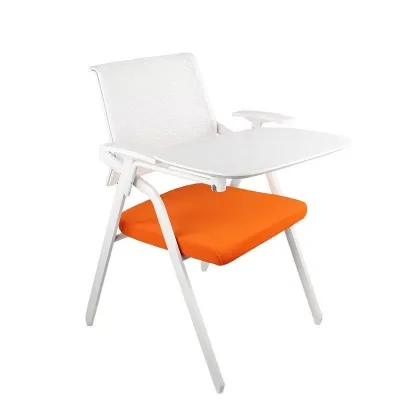
The backrest material also varies significantly, influencing both comfort and maintenance requirements. Options include PP plastic, wood, and hard plastic wood composites. The choice of material impacts the chair's weight, acoustic properties, and resistance to wear in high-traffic training environments. Additionally, the presence or absence of armrests is a defining characteristic. Some models are supplied without armrests to maximize space and facilitate easy movement, while others include armrests for enhanced comfort during longer sessions. The shape of the chair, typically square, and the style, often modern, contribute to the aesthetic integration within a training facility. Buyers should also note the condition of the product, which is predominantly listed as new, and the disassembly status, which can range from unfolded to knock-down configurations for efficient shipping.
Compliance, Certification, and Safety Standards
Ensuring that training chairs meet international safety and quality standards is a non-negotiable aspect of B2B procurement. Compliance verification protects the buyer from liability and ensures the furniture is safe for use in schools and corporate settings. The supply chain data highlights several certifications that serve as indicators of quality assurance. Common certifications observed include CE and ISO, which are critical for products entering the European and global markets. These certifications suggest that the manufacturing processes and product safety have been evaluated against specific regulatory frameworks.
Beyond general certifications, specific standards for office and school furniture are vital. Some listings reference SGS and BIFMA certificates, which are highly relevant for office furniture. BIFMA (Business and Institutional Furniture Manufacturers Association) standards are widely recognized in the United States and globally for testing the durability, safety, and structural integrity of office chairs. The presence of an SGS certificate further validates the material safety and performance testing of the product. However, buyers must exercise caution and verify the specific version of the standard applied, as the data mentions EN 1335, a European standard for office seating, but does not confirm that every listed product meets this specific requirement.
Safety features are also embedded in the design specifications. For instance, some models feature full rounded edges designed specifically for safety, reducing the risk of injury in active training environments. The warranty period is another proxy for manufacturer confidence, with observed ranges extending from 3 to 5 years. A 3-year warranty is common, but some suppliers offer extended coverage up to 5 years, indicating a higher confidence in the product's longevity. When evaluating suppliers, buyers should request proof of these certifications and ensure they are current and applicable to the specific model being purchased. It is important to note that while certifications like CE and ISO are frequently listed, the specific scope of these certifications must be confirmed to ensure they cover the specific training chair model and its intended usage environment.
Cost Drivers and Pricing Dynamics
The pricing of training chairs is influenced by a complex interplay of material costs, manufacturing complexity, and logistical factors. The observed price range in the market is substantial, spanning from $1.50 to $4,980 USD. This wide variance reflects the difference between basic, high-volume models and premium, specialized units with advanced features. The lower end of the spectrum typically corresponds to simple, stackable chairs with minimal customization, often made from standard PP plastic and steel tubes. In contrast, the higher price points may be associated with chairs featuring specialized cushioning, such as moulded foam, custom branding, or complex mechanical adjustments.
Material composition is a primary driver of cost. Chairs with wooden backrests or hard plastic wood composites may command different price points compared to those made entirely of PP plastic. The thickness of the steel frame, such as the 1.2mm specification observed, also impacts the cost, as heavier gauge steel requires more raw material and energy to produce. Additionally, the packaging method influences the final landed cost. Products packed in boxes or with carton bubble wrap may incur higher packaging costs compared to those shipped in knock-down (KD) configurations, which optimize container space and reduce shipping volume.
Minimum Order Quantity (MOQ) is another significant factor affecting the unit price. The observed MOQ range is from 1 to 500 units. Buyers purchasing in smaller quantities may face higher per-unit costs due to the lack of economies of scale. Conversely, larger orders often benefit from volume discounts, bringing the unit price closer to the lower end of the observed range. Customization is a major cost variable; while customization is available, adding custom colors, logos, or specific dimensions will inevitably increase the production cost and potentially the lead time. Buyers should also consider the origin of the product, with Guangdong Province, China, being a noted origin for many units. While this region is a manufacturing hub, logistics costs from this location to the destination market will vary based on current freight rates and shipping routes.
Typical Applications and Usage Scenarios
Training chairs are designed to serve a variety of functional environments, and selecting the right model depends heavily on the intended application. The data indicates that these chairs are suitable for school classrooms, office training sessions, and college environments. In a school setting, durability and safety are paramount. Chairs with rounded edges and sturdy steel frames are ideal for high-traffic areas where students may move frequently. The "School Chair" product name explicitly links these items to educational institutions, suggesting they are built to withstand the rigors of daily classroom use.
For corporate training and office environments, the focus shifts slightly towards ergonomics and aesthetics. The "Modern" style and "Office Furniture" classification highlight their suitability for professional settings. In these contexts, chairs with armrests and cushioned seats, such as those with moulded foam, may be preferred for longer training sessions to reduce fatigue. The compatibility with desks is a crucial feature for office applications, ensuring that the chair fits seamlessly under standard workstations. The "Changeable" color attribute allows organizations to match the chairs with their corporate branding or interior design schemes, enhancing the visual cohesion of the training room.
The "College" usage specification points to the need for chairs that can accommodate a wide range of body types and provide comfort for extended periods. In this setting, the load capacity of the chair becomes a critical consideration, with some models rated for 150kg. The "Knock Down" packing option is particularly beneficial for large institutions, as it allows for efficient storage and transport of chairs when they are not in use, such as during summer breaks or when reconfiguring classroom layouts. Whether for a small training room or a large lecture hall, the versatility of these chairs, combined with their specific design features, makes them adaptable to various educational and professional training scenarios.
Supplier Evaluation and Origin Verification
Selecting a reliable supplier is as important as the product specifications themselves. The sourcing data indicates that many training chairs originate from China, with specific mentions of Guangdong Province as a manufacturing hub. This region is known for its robust furniture manufacturing infrastructure, but buyers must still conduct thorough due diligence. Supplier evaluation should focus on their ability to provide consistent quality, adherence to lead times, and responsiveness to customization requests.
Buyers should verify the supplier's capacity to meet the specific MOQ requirements, which can range from single units to 500 units. For large-scale procurement, ensuring the supplier can handle bulk orders without compromising quality is essential. The "Customization" attribute being available suggests that suppliers are flexible, but buyers must confirm the lead times associated with custom orders, as these can extend beyond standard production cycles. Additionally, the "Product Name" and "Model" details, such as SC0093, SC0074, and SA0054, serve as unique identifiers that buyers should use to track specific product lines and ensure consistency across orders.
When evaluating suppliers, it is crucial to check their track record regarding certifications. While CE, ISO, SGS, and BIFMA are listed, buyers should request valid certificates for the specific models they intend to purchase. The presence of a "3-5 Years" warranty is a strong indicator of supplier confidence, but the terms of the warranty should be clearly understood, including what is covered and the process for claims. Furthermore, the "Condition" of the product being listed as "New" should be verified upon delivery to ensure that no refurbished or damaged goods are shipped.
Quality Control and Long-Term Procurement Considerations
Implementing a robust quality control (QC) process is vital for maintaining the integrity of the procurement. Given the variability in materials and construction, buyers should establish clear acceptance criteria before production begins. Key areas to inspect include the thickness of the steel frame, the integrity of the welds, and the finish of the plastic or wood components. The "Steel Tube" thickness of 1.2mm should be verified through random sampling or third-party inspection reports. Similarly, the "Back Material" should be checked for consistency, ensuring that the PP plastic or wood matches the agreed-upon specifications.
Long-term procurement considerations involve planning for maintenance and replacement. The "Warranty" period of 3 to 5 years provides a baseline for expected product life, but actual durability depends on usage intensity. In high-traffic training environments, chairs may require more frequent maintenance. Buyers should consider the availability of spare parts, such as casters or armrests, and the ease of disassembly for repairs. The "Disassembly" feature and "Knock Down" packing suggest that these chairs are designed for easy maintenance and storage, which can extend their operational lifespan.
Sustainability is also an emerging consideration in B2B procurement. While not explicitly detailed in the provided data, buyers should inquire about the recyclability of materials, particularly the PP plastic and steel components. The "Standard" of 7.9 kg for some models indicates a specific weight class, which can be relevant for logistics and environmental impact assessments. Finally, maintaining a relationship with a supplier who offers "Changeable" color options and "Customized" features allows for future adaptability, ensuring that the training chairs can evolve with the changing needs of the organization. By focusing on these long-term factors, buyers can secure a reliable supply of training chairs that deliver value over their entire lifecycle.
FAQs
What certifications do training chairs typically have?
Training chairs often carry CE and ISO certifications. Some models also include SGS and BIFMA certificates for office furniture safety. Buyers should verify specific certificate versions for their intended market.
How is the steel frame thickness specified?
The steel tube frame thickness is commonly specified as 1.2mm. This dimension contributes to the structural durability and load-bearing capacity of the chair in high-traffic environments.
Which backrest materials are available for these chairs?
Available backrest materials include PP plastic, wood, and hard plastic wood composites. The choice of material affects weight, acoustic properties, and resistance to wear in training settings.
Can training chairs be customized for specific needs?
Customization is available for these training chairs. Buyers can request changes to colors or dimensions, though this may impact production lead times and unit pricing compared to standard models.
What is the typical warranty period for training chairs?
The warranty period typically ranges from 3 to 5 years. A longer warranty often indicates higher manufacturer confidence in the product's longevity and structural integrity over time.
How are these chairs packaged for shipping?
Packaging options include knock-down configurations, boxes, or carton bubble wrap. Knock-down packing optimizes container space, while boxed units offer additional protection for delicate components during transit.
What is the maximum load capacity for reinforced models?
Reinforced models can support a load capacity of up to 150kg. This specification ensures safety and stability for a wide range of users in college or office training environments.